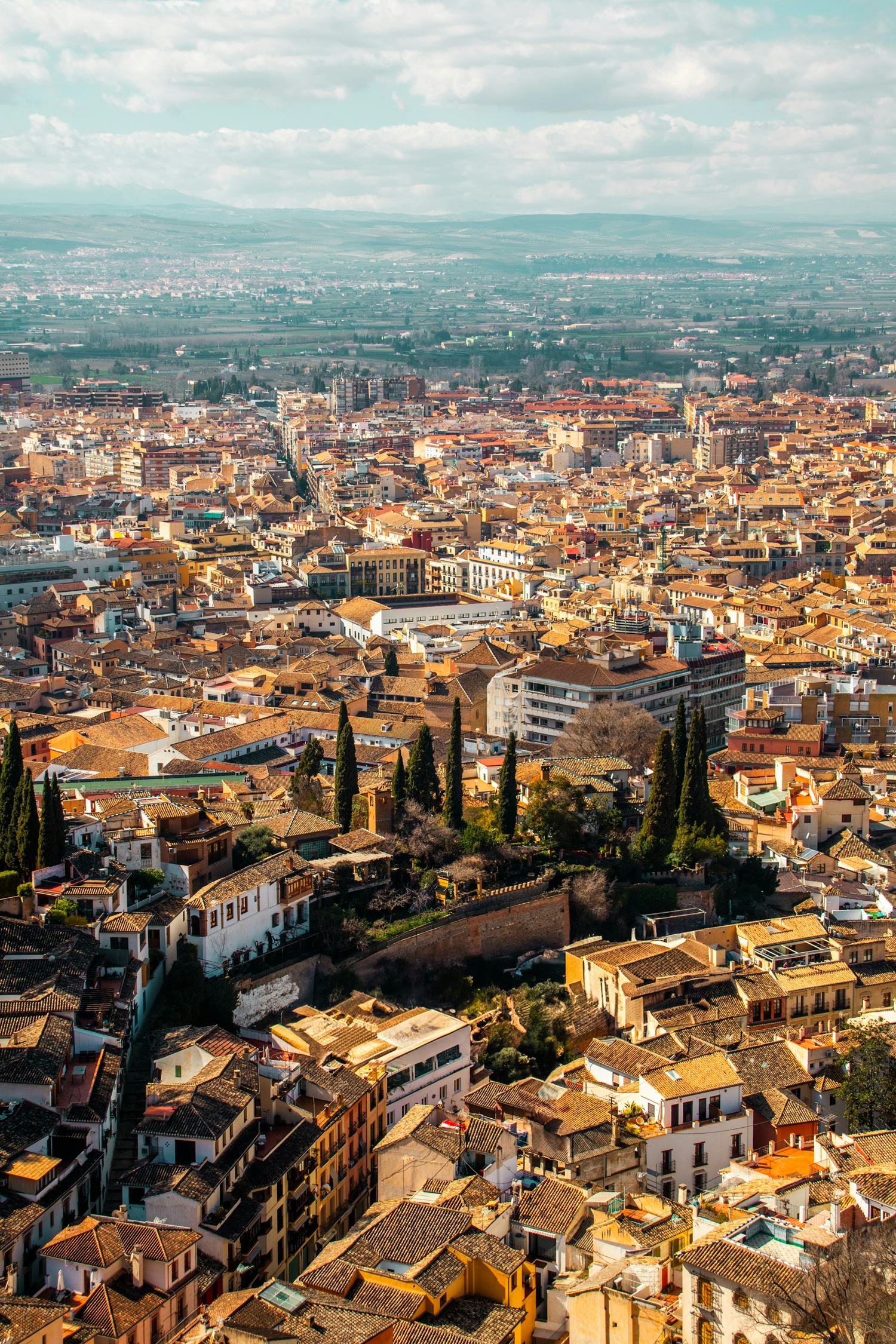
The Future of Cooling · The Case

Find the roofs where cooling can do the most.

Emissiv exists to break the Cooling Paradox with radiative cooling coatings. We built the map that finds dark, heat-absorbing roofs, adds the building context behind them, and turns that into a ranked coating opportunity.

Scroll to see how
01 · The paradox we exist for

A warming world demands more cooling, and cooling warms the world.

Cooling already takes around a tenth of the world’s electricity, and demand is set to double by 2050. Every new air conditioner burns power and vents heat, which raises temperatures, which calls for more cooling. Emissiv’s answer is not a bigger machine. It is a coating that harnesses the power of deep space, shedding heat passively to the coldest sink there is.

“We believe the solution is not about more complex machines, but instead one that utilises passive cooling.”
02 · The bridge

The metric our satellite reads is the metric Emissiv’s coating moves.

A radiative cooling surface works by reflecting solar energy and radiating heat away. Albedo, solar reflectance, is not a side detail of the product. It is its core performance number. That means a tool that measures roof albedo from orbit is not a different business. It is a map of where the heat, and the opportunity, are.

The darkest roofs are the ones that need Emissiv most. Now we can find every one of them.

See how the coating works →
03 · What we built

One roof record, from pixel to decision.

The public dashboard is browse-only today: 12 precomputed UK areas, 4,744 roofs, rebuilt with Sentinel-2 cloud/shadow/snow/no-data masking. Live scan-any-address returns after backend QA.

91.95%
OS NGD material
Most roofs use authoritative Ordnance Survey material, badged OS NGD and shown without the spectral-model hedge. The 10 m spectral model is only a fallback where OS is absent or ambiguous.
4,744
SCL-masked roofs
Albedo is measured from Sentinel-2 surface reflectance using NTB physics. Cloud, shadow, snow and no-data pixels are excluded from each roof average rather than filled with zeros.
37.82%
EPC-linked roofs
Where a certificate exists, cooling demand is measured from EPC/SBEM. Otherwise the card uses a BEES benchmark estimate where building use implies cooling, or shows physics only with no pounds.

Each roof comes back as a full record: measured albedo, the metric the coating moves; material from OS NGD where present; geometry from LiDAR, including pitch, orientation, height and form on 88.68% of roofs; building context, use, age and EPC joined by UPRN; and planning flags, so eligibility is visible before a call. The card then models how hot the roof runs from albedo plus assumed stock-roof emittance, and sizes the coating opportunity with Emissiv’s 95% reflective, 95% emissive coating.

The output is easy to read: heat rejected and peak-temperature cut are physics on every roof. Cooling pounds appear only when there is a cooling signal. Tier A uses the building’s own EPC/SBEM cooling demand; Tier B uses a published BEES benchmark for that building type and is labelled estimated; Tier C shows physics only and claims no bill saving.

That record is a drop-in superset of the Google Solar API: we mirror its per-roof geometry schema (pitch, azimuth, plane height, area) and add the layers nobody else holds: solar reflectance, material, and how hot each roof is modelled to run. Match their fields, extend them.

Every figure is regenerable from a script, labelled measured or projected. See where every number comes from → · the full report →

04 · The heat is real

You can see the problem from space.

On a single clear day, free thermal satellite put the built surfaces of one UK estate at 41.4°C, peaking near 44.8°C, far above the air temperature around them. That surface heat load, soaked up by dark, low-albedo roofs, is exactly what Emissiv’s coating is built to shed.

The Cooling Paradox is not abstract. It is 44.8 degrees on a roof, mapped.

05 · What it does for Emissiv

Find the heat. Size the prize. Prove the fix.

i

Precision demand generation

The ideal customer is a large, dark, hot roof. Targeting is reflectance-led: every roof is ranked on measured albedo and area. The cooling-load signals (use, EPC, climate) are a modelled overlay that sharpens that ranking, not a gate that drops roofs. Cold outreach becomes a targeted map.

ii

The prize, in heat, pounds and carbon

Total dark roof area is the addressable market. Per building, reflectance, area and the 95% coating give annual heat rejected and peak-temperature cut. Cooling cost and CO₂ are shown only for cooled buildings, using EPC/SBEM when available or a clearly labelled BEES estimate.

iii

Proof at scale

The same free satellites revisit every few days, the basis for measuring change over time and verifying impact remotely, building the evidence the mission and its funders need.

The scale · illustrative
~500 km² of UK roof below 0.25 reflectance · the coating-relevant surface
~400 TWh/yr of solar heat on those roofs · comparable in magnitude to UK annual electricity demand (illustrative scale, not deliverable electricity)

An illustrative extrapolation, not a survey. Across 12 city centres we mapped 3.8 km² of roof, of which 1.9 km² sits below 0.25 reflectance (the band a cooling coating can meaningfully help; the stricter <0.18 “strong candidate” set is 0.6 km²). Scaling that ~51% share to the UK’s ~2,000+ km² of building roof (an order-of-magnitude estimate) at half the share we map in those centres (city centres skew to flat commercial decks, so the national mix is lighter) gives ~500 km². The solar-heat figure is robust physics, the load a 95% coating bounces back. We deliberately do not headline a national £ figure: the cooling bill depends on air-conditioning, which only a small minority of UK homes (around 5%) have. Scaling is a question of compute, not data or cost.

06 · The honest frontier

Where the engine stops, and what comes next.

We will not oversell it, and that discipline is the point.

Targeting today, verification next. Free satellites resolve reflectance, and authoritative open data (OS NGD) resolves material, well enough to find and rank roofs at national scale. They cannot yet isolate one small roof’s temperature from the car park beside it, free thermal is 100m coarse, so per building before and after proof needs finer thermal (higher resolution thermal missions, aerial or drone) on the highest value sites. The path is mapped.
Lead with reflectance, verify with temperature. A radiative-cooling coating works largely through heat radiated, not visible colour, so the truest measure of its effect is surface temperature, not albedo alone. The same free data stack already reaches into the thermal band, which is exactly where the next rung of the product points.
07 · The mission, made measurable

From a belief about cooling to a map of where to act.

Emissiv set out to keep the world cool without warming it. This turns that mission into something you can point at: here are the dark roofs, here is the building context, here is the modelled heat, here is the coating opportunity, and here is exactly how confident each number is.

Same physics as the product. Pointed at the whole country. For free.

Explore your area → The coating Full analysis Data lineage
Emissiv · The Future of Cooling · measured, not asserted
Imagery: Unsplash · Roof data: OS NGD · EPC: GOV.UK Energy Performance of Buildings (OGL) · Contains OS data © Crown copyright